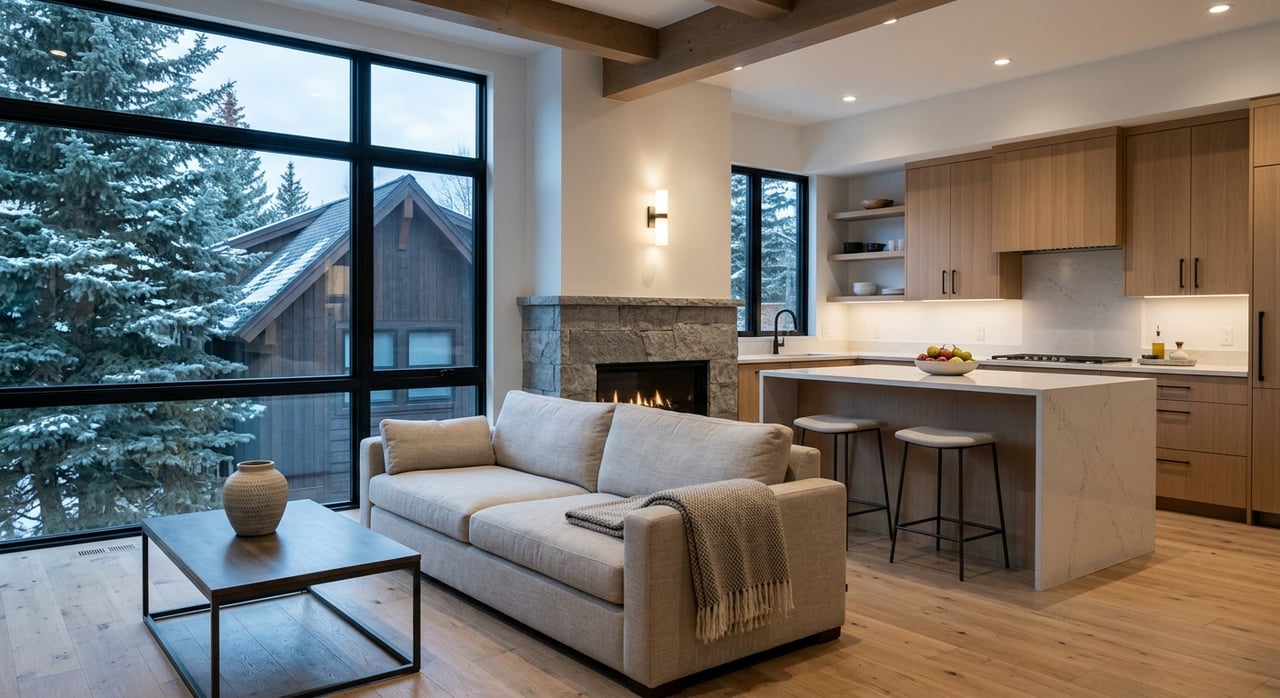
Considering Nightly Rental Potential In Whitefish
June 18, 2026
June 18, 2026
Are you eyeing a Whitefish property and wondering if it could work as a nightly rental? That question is smart, but in Whitefish, the answer starts with rules before revenue. If you want to buy with confidence, you need to verify zoning, permits, taxes, parking, and any HOA limits before you assume a property has short-term rental potential. Let’s dive in.
In Whitefish, short-term rental use is defined as lodging for periods of less than 30 days. That means the first question is not how much income a property might produce. The first question is whether nightly rentals are allowed at that specific property at all.
This matters because Whitefish treats nightly rentals as a land-use issue first. The city code makes clear that short-term rentals are only allowed in certain zoning districts, and the city frames the issue around neighborhood impacts such as traffic, noise, and housing availability.
Before you look at zoning, confirm whether the property is inside Whitefish city limits or outside them. That single detail changes which rules apply and can completely affect whether your plan is possible.
Inside city limits, Whitefish rules govern short-term rentals. Outside city limits, Flathead County rules apply instead, along with separate zoning and health requirements.
This is especially important because Whitefish’s zoning map layer is limited to zoning polygons within city limits. In practical terms, that means you should verify the parcel itself rather than rely on a listing description, a neighborhood name, or a general map view.
According to the City of Whitefish’s current short-term rental guidance, STRs are permitted only in WB-3, WRR-1, WRR-2, WRB-1, and WRB-2. The city code describes these more broadly as WB-3, Resort Residential, and Resort Business districts.
The key takeaway is simple: confirm the exact zoning district on the official map for the actual parcel you want to buy. A property can be close to resort amenities or downtown activity and still not qualify if the parcel zoning does not match an allowed district.
Terms like “nightly rental potential” or “investment opportunity” can be useful starting points, but they should never replace verification. Whitefish code allows the city to treat advertising a noncompliant or wrongly zoned STR as evidence of a violation.
If you are buying for part-time personal use and part-time rental income, that detail matters a lot. You want written confirmation before you build your budget around future bookings.
If the property is inside Whitefish city limits and in an allowed district, the next step is compliance. A legal nightly rental in the city requires both a Short-Term Rental Permit and Business Registration.
The current city application lists a $400 fee, and the brochure states the annual permit fee is $400 with renewal by January 1. The city also requires a yearly Fire Life Safety Inspection.
Each rented unit needs its own application. The city defines a unit broadly, which can include a whole home, townhouse, condo, apartment, or even a separately rented bedroom for stays under 30 days.
Parking is one of the biggest practical filters for buyers. The city application states the standard off-street parking rule is two spaces per unit, except in WB-3.
That means a property that looks appealing on paper may not work if the off-street parking does not meet the requirement. Before you close, make sure the site plan and parking setup can support the intended use.
Whitefish also requires several operational details that buyers should understand early:
These may sound small, but they affect both setup and ongoing management. If you live out of state or plan to use the home as a second property, local-contact coverage and service logistics deserve careful thought.
If the property is outside Whitefish city limits, Flathead County rules apply instead. The county states that most zoned areas require an administrative conditional use permit, some zones allow STRs by right, and STRs are not allowed in other zones.
The county also requires a valid public accommodations license, written compliance certification, and neighbor-notification receipts in permitted zones. So even if a property is just outside the city, you should not assume the same rules or the same approval path.
Flathead County Environmental Health states that a public accommodations license is required for nightly or weekly lodging such as tourist homes and vacation rentals. The review process begins with a plan review application.
Whitefish’s STR brochure also directs owners to the Flathead City-County Health Department for the State of Montana public accommodation license for a tourist home. For buyers, that means health review is part of the due diligence, not an afterthought.
If you are evaluating a property for lifestyle use plus rental income, taxes need to be in your numbers from day one. Montana’s Department of Revenue states that overnight lodging is subject to an 8% Lodging Facility Sales and Use Tax.
The state also requires each seller of lodging accommodations to register each accommodation and obtain a seller’s permit. On top of that, Whitefish imposes a 3% resort tax that applies to lodging, including short-term vacation rentals.
The city application also states that resort tax must be reported and remitted monthly even if gross sales are zero. That is a good reminder that compliance has both cost and administrative responsibilities.
A property can be zoned correctly and still not work for nightly rentals. That is one of the most common buyer surprises in condo and townhouse communities.
Montana legislative materials explain that HOA governing documents may include covenants, conditions, restrictions, architectural or design guidelines, and other rules. HOAs may also enact or enforce rules concerning operation of the community.
For you as a buyer, the practical takeaway is clear: review the declaration, bylaws, and rules, and get written confirmation on nightly rentals before you underwrite income. Do not rely on verbal comments from a seller, neighbor, or property manager.
Whitefish benefits from a true four-season visitor base. Whitefish Mountain Resort describes itself as a four-season destination with winter skiing and snowboarding, summer activities, year-round lodging, and access to Glacier National Park as a major draw.
The resort is about 35 miles from the West Glacier entrance. That mix supports the idea of ongoing visitor demand, but it also points to seasonal patterns rather than perfectly even demand all year.
For buyers, that means your plan should account for fluctuations. A realistic pro forma should reflect seasonality along with permit costs, taxes, inspections, and operating requirements.
If you are considering nightly rental potential in Whitefish, move through the process in this order:
That sequence can help you avoid expensive assumptions. It also gives you a cleaner path to evaluating whether a property fits your goals for personal use, income potential, or both.
Not every Whitefish property with appeal is a good nightly rental candidate. The right fit usually comes down to a combination of location, legal use, parking, building rules, and how much operational complexity you are prepared to manage.
If you want a lock-and-leave second home, a condo or townhome may look attractive, but association rules become especially important. If you want more flexibility, a single-family home may offer different advantages, but zoning, parking, and local-contact planning still need to line up.
The goal is not just to find a property you love. It is to find one that matches how you actually plan to use it, with the details confirmed before closing.
If you are sorting through Whitefish properties and want a clear, detail-driven process, Maureen Gerber can help you evaluate the fit, ask the right questions early, and move forward with confidence.
Stay up to date on the latest real estate trends.

Choosing the right real estate professional makes all the difference when buying or selling in Whitefish. Clients receive expert guidance, strong market knowledge, and a proactive, detail-driven approach designed to make every transaction seamless and strategic. Whether purchasing a first home, searching for a mountain retreat, securing an investment property, or preparing to list, each step is handled with clear communication, skilled negotiation, and a deep understanding of property value and craftsmanship. With a commitment to protecting clients’ interests and delivering results, the focus is always on helping you find not just the right property, but the right place to belong—so you can truly live where you love and love where you live.
MAUREEN GERBER
206 LUPFER AVE STE 101 WHITEFISH, MT 59937